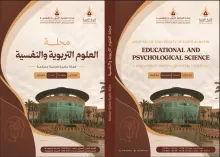


The College of Education was established in the academic year 1412/1413 AH under the name Intermediate College for Women. Throughout its history, the College has undergone significant development and institutional transformation. The first cohort of students enrolled under the university system during the 1418/1419 AH academic year and graduated in the 1421/1422 AH academic year.
About Faculty
To achieve excellence in teaching and learning, teacher preparation, scientific and educational research, and meaningful contributions to local community development.
To prepare professionally distinguished educational professionals capable of producing high-quality scientific research that contributes to sustainable development within an attractive educational environment supported by effective community partnerships.
Develop students' competitive capabilities in accordance with the requirements of the knowledge society.
Support innovative scientific research that contributes to the advancement of the knowledge economy.
Strengthen the College's role in sustainable development through community partnerships and social responsibility initiatives.
Continuously develop academic programs in accordance with recognized quality standards.
Practical training programs for college departments
Dean's Message
Prof. Mohammed bin Khuzaym Al-Shammari
In the name of Allah, the Most Gracious, the Most Merciful. Peace and blessings be upon our Prophet Muhammad, his family, and all of his companions.
In alignment with the objectives of Saudi Vision 2030, which emphasize strengthening the education system and enhancing its effectiveness, and in accordance with the vision and mission of the University, the College of Education is committed to fostering an attractive academic environment through its graduate programs, with the aim of preparing graduates who are well equipped to meet the evolving demands of the labor market.
The College offers a range of master's degree programs, including Curriculum and Instruction, Educational Leadership, Educational Guidance and Counseling, and Early Childhood Education. In addition, the College provides newly developed postgraduate diploma programs through the Optimal Investment in Educational Personnel Initiative. These include Higher Diplomas in Digital Skills, English Language, Life Skills, Critical Thinking, and Principles of Management.
During the initial phase of implementation, these diploma programs are designed for in-service teachers, enabling them to acquire an additional specialization beyond their original field of study. This qualification prepares them to teach newly introduced subjects across general education levels, including the new secondary school pathways.
Furthermore, the College regularly organizes training courses, seminars, and academic forums that serve various sectors of the community. Looking ahead, the College is committed to expanding its graduate offerings by introducing new academic specializations that address the evolving needs of the educational sector.
Contact
Basic email contact webform.